In this guide
A cash discount, dual pricing and a card surcharge describe different pricing arrangements. Calling a checkout fee a “cash discount” does not change what the customer was shown or how the final charge was calculated. Evaluate the actual price presentation, transaction and receipt before evaluating a program's marketing name.
This U.S.-focused educational draft uses official sources reviewed on 17 November 2026. Network rules, provider requirements and laws can change. Obtain current written guidance from your acquirer/provider and qualified legal advice for the jurisdictions and channels involved before implementation. This is not a determination that a particular program is lawful or available to your business.
Three concepts to keep separate
| Arrangement | Basic concept | Question to test |
|---|---|---|
| Cash discount | A reduction from the properly presented regular price for an eligible payment method | Was the higher regular price genuinely disclosed before the decision? |
| Dual pricing | Both applicable prices are presented to the customer | Do display, checkout and receipt consistently reflect the chosen price? |
| Surcharge | An additional charge for an eligible card payment | Is that transaction eligible under applicable rules and law? |
Dual pricing is a presentation approach; it is not a blanket exemption from network or consumer-protection requirements. The arrangement must be evaluated in substance, including what happens when the customer uses a debit or prepaid card.
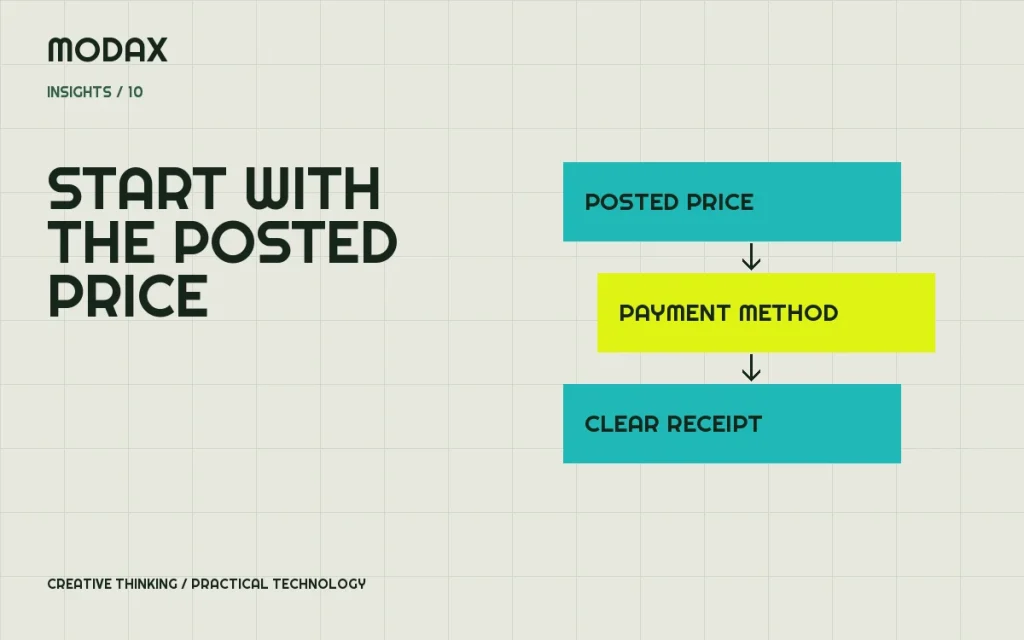
Follow the displayed price through checkout
Visa's U.S. merchant surcharge Q&A explains its distinction: a cash-discount offer should display the card price, or card and cash prices side by side, and the final card amount should follow those displayed item prices rather than being reached through an added card fee. Visa also states that U.S. debit and prepaid transactions cannot be surcharged, including a debit card processed through a “credit” selection.
Do not assume a payment terminal's button label identifies the underlying card type. Ask the provider to demonstrate the actual transaction handling, signage and receipt output with each supported payment method.
Use an illustration to expose questions, not imply compliance
Suppose an item is displayed as “card price $100 / cash price $97.” These are hypothetical teaching amounts, not a recommended discount or processing quote. A useful review asks what the customer sees on the shelf or website, which amount appears before payment, how tax is calculated and what the receipt records.
Now compare a display of “$97” followed by an extra charge when the customer chooses a card. That is a different customer experience and needs its own surcharge analysis; renaming the added line does not establish that it is a discount. Have the provider and adviser review the complete flow rather than approving a label in isolation.
Check network requirements separately
Mastercard's merchant surcharge guidance describes its U.S. requirements, including distinctions between credit and debit/prepaid and required disclosures. Do not copy one network's requirements onto every card brand. Confirm current notice/registration requirements, applicable limits and receipt rules with the acquirer for the exact arrangement.
Keep the provider's written configuration instructions and approval record. A plugin setting or terminal program should not be treated as the authoritative compliance document.
Laws and channels add another layer
California's Attorney General warns against misleading price differences and describes the legal context around its surcharge statute. Its hidden-fee guidance is also relevant to how prices and mandatory charges are presented. Other jurisdictions and business types can have different requirements.
The FTC's fee-rule FAQ addresses its rule for live-event tickets and short-term lodging; it is not a universal permission slip for payment charges in every industry. Review sector, state and federal requirements together. An arrangement used at a retail counter may need different implementation online.
What to ask before enrolling
- Which legal business, products, locations and sales channels were evaluated?
- Is this a discount, two displayed prices or a surcharge in actual operation?
- How are debit, prepaid, refunds, partial returns and taxes handled?
- Which network notices, disclosures and receipt requirements apply?
- What total fees, contract terms and equipment obligations remain?
- Who owns configuration reviews and changes when rules are updated?
Compare ordinary processing and the proposed program using the same realistic sales assumptions. Do not interpret “zero cost” marketing as proof that all business costs, customer reactions or contract obligations disappear.
Discuss fit before changing the checkout
Modax's merchant services conversation may involve CardPlicity, Modax's sister company, for provider/referral discussions. Eligibility and program availability are subject to the relevant provider's assessment. Modax can discuss the technical website and checkout scope after the intended arrangement is confirmed; it does not promise approval, rates or universal compliance.