In this guide
“High risk” describes a provider's assessment of payment-processing exposure. It is not a universal business category, a guarantee that an account is available, or a legal judgment that the business is doing something wrong. Different providers may evaluate the same sales model differently, and some products or activities may be prohibited rather than eligible for a higher-priced account.
This guide explains questions to raise with a qualified provider. It is educational information, not legal advice, underwriting approval or a quote. Confirm current requirements for the business, jurisdiction and provider before accepting payments.
What a provider needs to understand
Describe what you sell, where customers are located, how orders are fulfilled and when the customer receives the product or service. Include recurring billing, advance payments, unusually long delivery periods and other details that affect the provider's exposure.
Provide accurate processing history where requested. Disputes, refunds and previous account restrictions should be discussed plainly. A provider cannot give a useful eligibility assessment if the application describes a different business from the website or actual transactions.
Restricted is not the same as supportable
Read the specific provider's current product and business restrictions. For example, Stripe's restricted-businesses policy distinguishes activities it cannot support from those subject to restrictions. That policy is an example of one provider's rules, not a list of categories CardPlicity or any other provider accepts.
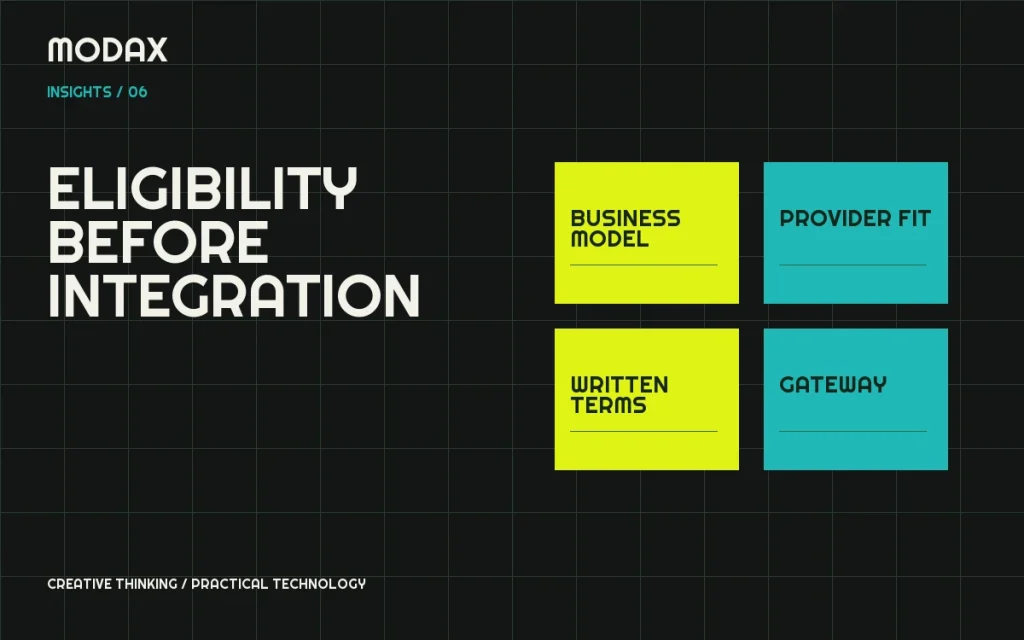
Ask for written confirmation of the actual sales model, products, channels and locations under review. An approval for one channel should not be assumed to cover a materially different one. Do not conceal products, route transactions through an unrelated business or treat a gateway integration as a workaround for an eligibility decision.
Disputes and chargebacks affect the conversation
A chargeback starts with a cardholder questioning a transaction through the issuer. The Stripe dispute guide describes its dispute process and balance implications. Specific procedures, evidence requirements and deadlines vary by provider and network.
Review whether product descriptions, delivery communication, billing descriptors and cancellation/refund policies accurately set customer expectations. Keep records appropriate to the transaction and the provider's process. Better documentation can support dispute handling, but no one should promise that every dispute can be prevented or won.
Understand reserves and funding terms
A reserve can temporarily hold some funds to address potential liabilities. Stripe's reserve explanation illustrates how its reserve arrangements relate to risk and anticipated refunds/disputes. Other providers' contracts may differ.
Ask about the reserve's calculation, duration, release conditions and treatment when the account closes. Distinguish authorization, settlement and availability for withdrawal. Model the effect of funding delays or retained funds on the business's cash flow before accepting a proposal.
Compare the complete agreement
| Area | Questions to put in writing |
|---|---|
| Eligibility | Which products, channels, countries and business model are accepted? |
| Pricing | What processing, gateway, recurring, dispute and incidental fees apply? |
| Funding | What timing, holds, reserves and review triggers apply? |
| Contract | What term, renewal, cancellation and equipment obligations exist? |
| Operations | Who handles support, integration, disputes and account changes? |
An advertised rate does not describe every cost. Request the applicable fee schedule and agreement, including any separate gateway or equipment arrangement. Evaluate projected cost using the same transaction assumptions for each proposal, rather than comparing a headline percentage with an all-in estimate.
Prepare an application without oversharing
Ask the provider which documents are required and how to submit them through its secure process. Typical requests can involve business identity, ownership, processing records and fulfillment details, but the provider must confirm the actual requirements. Do not send identity documents, bank credentials or customer card information through a general website enquiry form.
Prepare the public website too: accurate products, contact details, customer policies and a functioning purchase path. Technical readiness helps the review process but does not determine the underwriting outcome.
Where Modax and CardPlicity fit
Modax's merchant services enquiries may involve a referral to CardPlicity, Modax's sister company, for the payment-provider conversation. Modax can discuss the website, gateway and checkout integration scope. Provider eligibility, rates, reserves and approval remain subject to the relevant provider's assessment and agreement.
Start with a concise description of the business and the technical requirement. Keep sensitive application documents within the receiving provider's approved secure channel. The first useful outcome is a clear understanding of fit and next steps, not a promise of instant approval.