In this guide
A custom WordPress website does not have a meaningful universal price. A five-page site with a complex quoting integration can require more engineering than a larger editorial website. Page count describes some content work, but says little about business rules, data migration or the consequences of a failed transaction.
To get comparable proposals, describe what visitors and staff need to accomplish, what must connect to the website and who is responsible for content. Ask each supplier to state the assumptions behind the estimate. This guide provides a budgeting framework, not a Modax rate card or a published price guarantee.
Separate design scope from functional scope
Design scope includes discovery, content hierarchy, responsive compositions, components, interaction states and accessibility review. A prebuilt theme can be appropriate when its structure fits the business. A custom design requires additional decisions and implementation, but can remove compromises that otherwise become recurring workarounds.
Functional scope includes search, account behavior, forms, permissions, commerce, operational workflows and integrations. “Contact form” and “multi-step application with staff review” should not be priced as equivalent features. Specify validation, error recovery and what happens after submission.
Count content types and states, not just pages
A service page, article, project archive and case study have different editing and layout needs. A reusable system can support many records without designing every page independently. The budget still needs to cover content modeling, templates, administrative controls and testing of realistic content lengths.
Include empty states, missing images, search with no results, form errors and mobile navigation. These details affect the finished experience even though they are easy to omit from a sitemap.
Commerce and integrations change the estimate
An online store adds product data, taxes and shipping configuration, eligible payment methods, customer communications and critical transaction tests. Existing-store work may also require careful treatment of customers, orders and subscriptions. Do not assume a visual rebuild includes a complete commerce migration.
For a CRM or inventory connection, define the fields and direction of synchronization. Include authentication, duplicates, retries, monitoring and handoff. A connector subscription may be cheaper initially than custom development, but both require configuration and operational ownership.
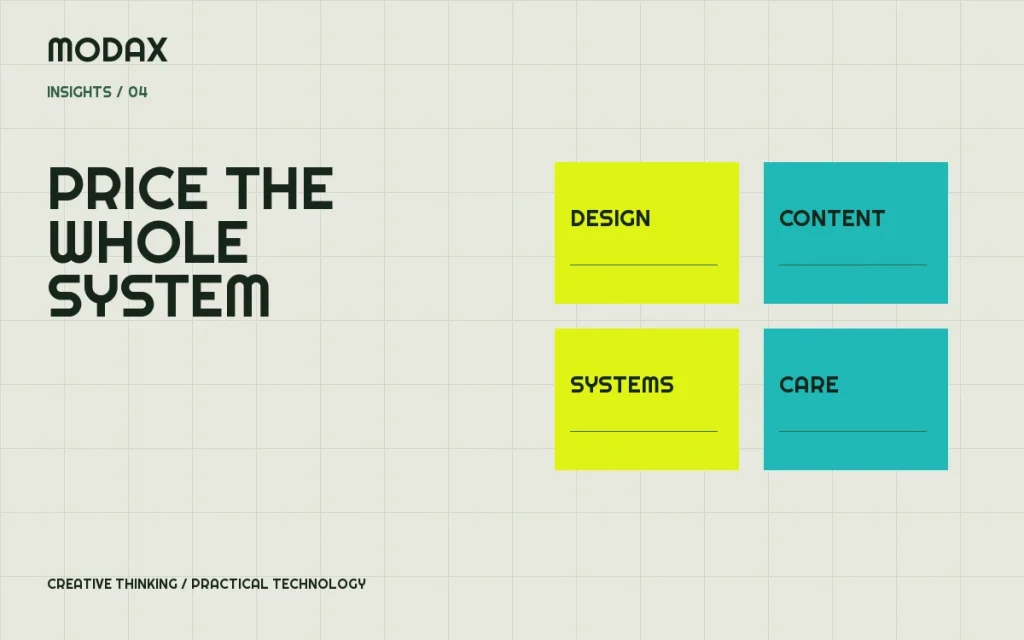
| Budget area | Questions to answer |
|---|---|
| Design | How many distinct compositions and interaction states? |
| Content | Who writes, approves, migrates and enters it? |
| Functionality | What rules, roles and integrations must work? |
| Migration | Which URLs, records and media must be preserved? |
| Validation | Which devices, workflows and accessibility checks are included? |
| Ownership | Who handles updates, recovery and future changes? |
Content development is real project work
Copy, photography, product information and approvals can determine the schedule. State whether the proposal includes interviews, writing, image preparation, SEO metadata and entry into WordPress. If the client supplies content, agree on its format, quality and delivery dates.
A polished layout cannot compensate for missing product details or service claims nobody can verify. Budget for factual review, especially for regulated products or legal and payment-related content.
Hosting, security and maintenance continue after launch
Ongoing ownership may include hosting, domain renewal, software licenses, backups, updates, vulnerability response, performance review and support. WordPress's backup guidance distinguishes website files from database content; a recovery plan needs both where applicable, along with a way to test restoration.
Security work also includes permissions, safe data handling and dependency management. Ask what is included at launch and what requires a continuing agreement. Avoid treating a plugin license as a complete security or maintenance service.
Build a total-cost model
Use a simple model: initial discovery/design/build/migration, plus recurring infrastructure and licenses, plus agreed maintenance and an allowance for likely changes. Compare proposals over the same planning period and with the same assumptions. Do not mix a build-only quote with one that includes content and continuing support.
If using a hypothetical hourly model, label every assumed hour and rate explicitly; neither is a market benchmark. A more useful early conversation may identify a smaller first release that solves the primary problem while deferring optional features.
What to prepare before requesting a proposal
- Current website and the reason for changing it.
- Primary audiences and the actions they need to complete.
- Required content types, systems and integrations.
- Existing URLs and data that must survive the rebuild.
- Content ownership, approval process and important dates.
- Budget constraints and what success should look like operationally.
Modax's web development service can use that information to define a practical scope and identify uncertainties before they become change requests. A sound proposal makes responsibilities, exclusions and acceptance criteria understandable alongside the price.